DROWNING · WRITTEN & DIRECTED BY DAR GAI · PRATEEK KUHAD AS TARUSH · MARGINAL MEDIAWORKS / D36 / JUGAAD MOTION PICTURES · SHOOTING IN NEW DELHI
/01
THE PREMISEFEATURE / DELHI
He was an artist. Now he’s just a pawn.
“Tarush” is a down on his luck indie musician in Delhi who, after one break-out hit, is struggling to get out from under the thumb of an underworld record label boss.
He performs to crowds who aren’t listening, loads the gear truck, and goes home to a flat he shares with his six-year-old and a brother fresh out of prison. Then, one day… he opens the wrong equipment box.
/02
THE WORLD / DELHI & GURGAON-SOHNA
The other side of India’s music scene.
DOOBNA / Hindi & Urdu for “drowning.”
This is the contemporary Indian music scene from underneath: corporate banquet gigs where the crowd wishes for the music to stop, kitty parties in half-built Gurgaon suburbs where a musician must don themed costumes, and a label boss whose actual business runs in the false bottom of an equipment case. Nobody here is in Bollywood. The artists are adjacent to money but touch none of it.
THE CORPORATE CIRCUIT / WHERE THE WORK ISTHE KITTY PARTY / WHERE THE MONEY ISTHE EQUIPMENT TRUCK / WHERE THE PRODUCT IS
/03
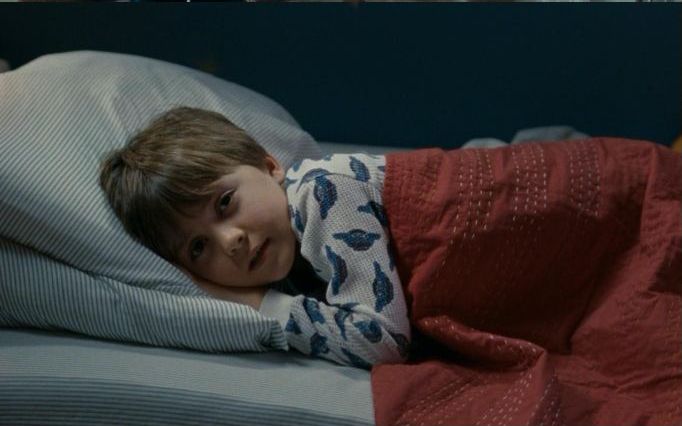
Tarush is a gifted singer-songwriter in Delhi with one break-out hit behind him and a debt to KT, the charismatic label boss who fronted his career. He pays it back one humiliating gig at a time: office banquets where the crowd only cheers once he stops playing, and a kitty party — a rich women’s social club — in Gurgaon, where he plays in a peacock costume for the host, Leela, and is paid in a shoebox of yellow Jordans. At home he shares a cramped flat with his hot-headed brother Manu and Glichu, the six-year-old in their care. On a bus a new melody comes to him — and he loses it to a phone call before he can record it. That night Glichu asks him for a lullaby, and he promises to write one.
Then, backstage at a corporate gig, he pushes on the bottom of an equipment box and finds it packed with cocaine. So is every other box: all this time, KT has been using him as a drug mule. He confronts KT and is beaten to the floor. When the police close in on KT’s operation — and on the man who has been carrying its drugs — the brothers decide their only way out of Delhi is to rob Leela, whose drawers are full of jewellery.
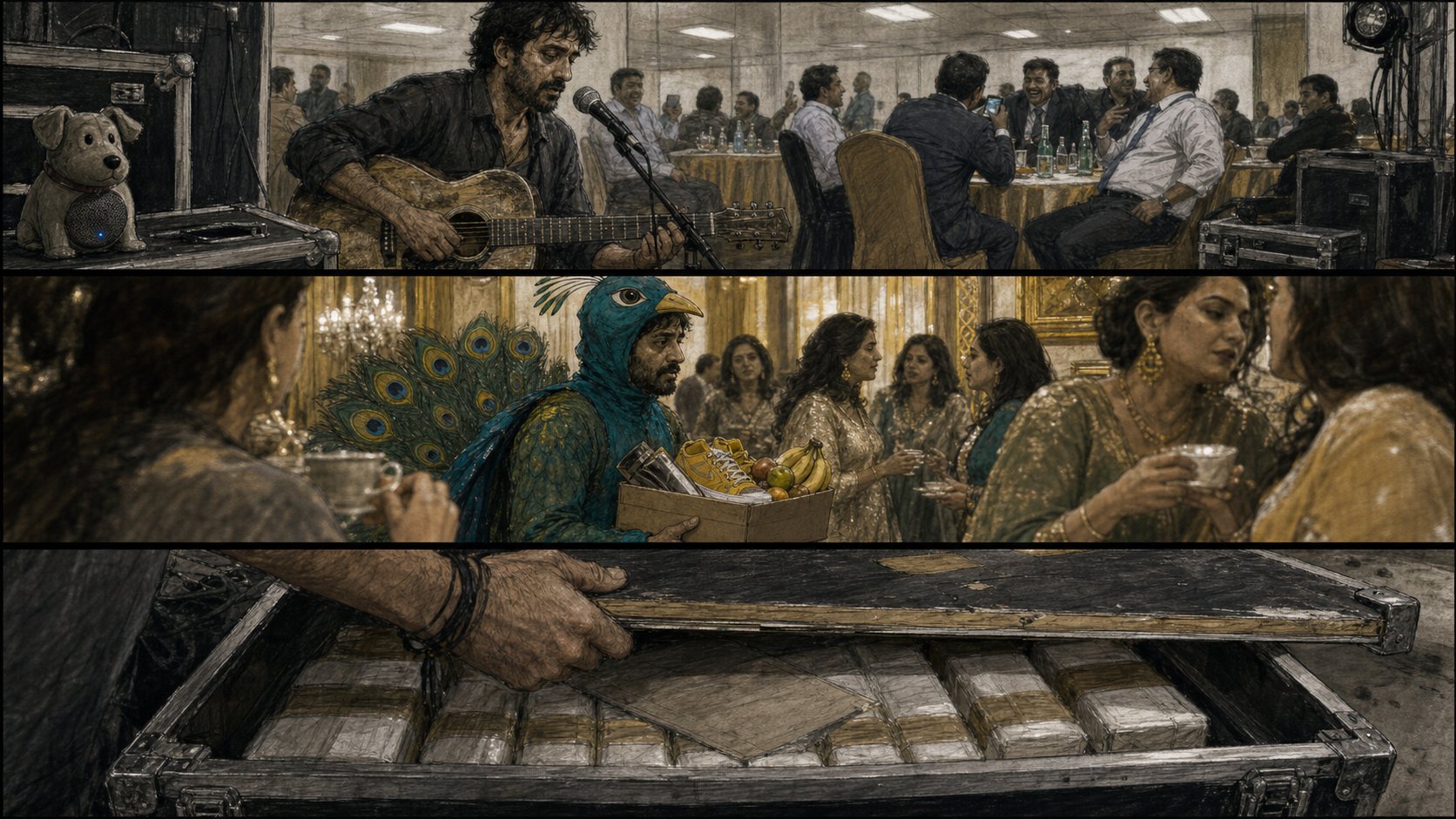
THE BANQUET HALL / THE PEACOCK / THE FALSE BOTTOM
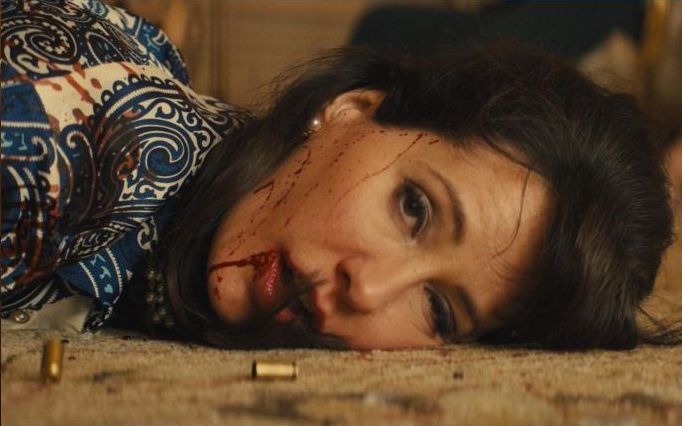
The house was meant to be empty. Leela walks in mid-robbery, Manu panics and swings an iron rod, and the brothers end up driving a bleeding woman to hospital — where she refuses to get out. She would rather go with the men who just hit her: her husband is an arms dealer who beats her and tracks her through a bracelet on her ankle, and she has just found two getaway drivers. The jewellery turns out to be almost all fake, and Leela needs money to disappear, so she names a bigger score: a Mahjong kitty party in South Delhi with a pot of one crore rupees — over $100,000.
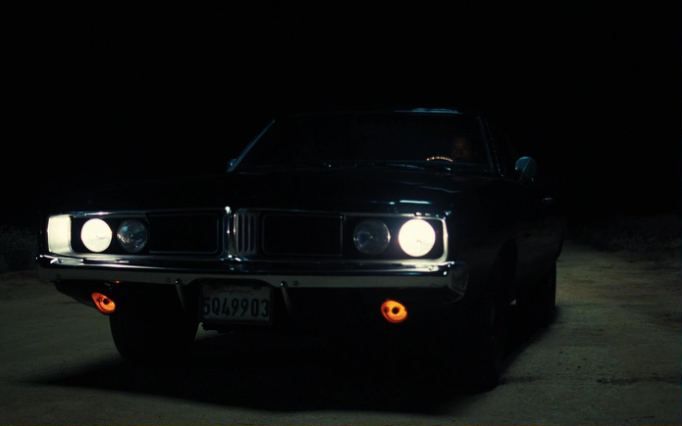
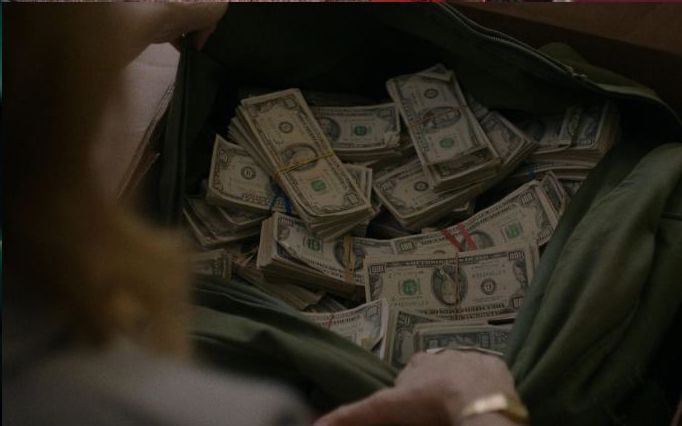
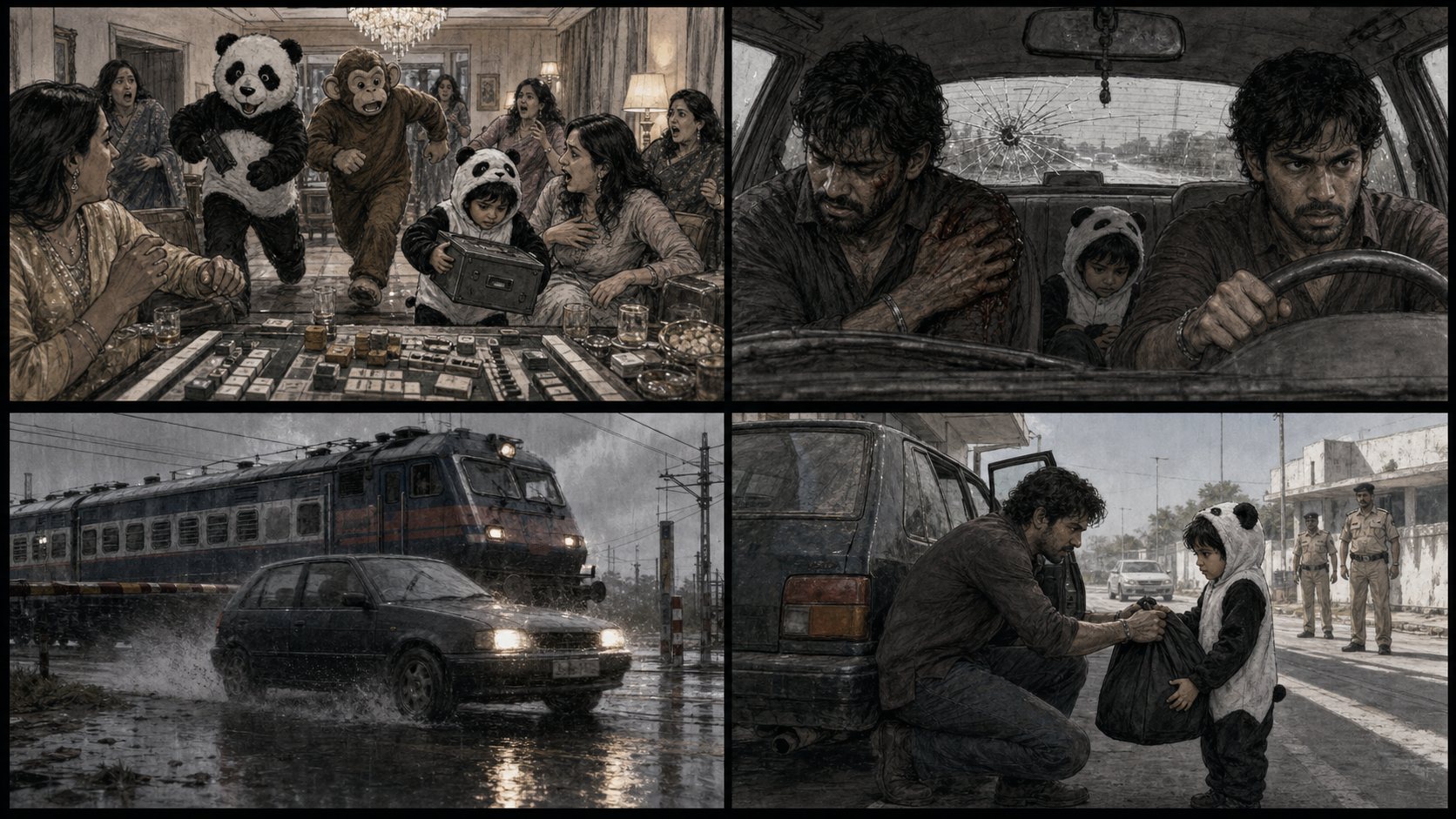
They rob it in rented panda and monkey costumes, with Glichu, dressed as a baby panda, carrying off the prize money. A guest opens fire and Manu takes a bullet. With Leela’s husband and his men closing in, Tarush leaves Glichu at a police station with the cash to keep him out of it — “Just… don’t become a musician” — before the car flips on the highway. Beaten and left in a ditch filling with rainwater, he finally remembers the lullaby.
THE MAHJONG PARTY / THE SHOULDER / THE LEVEL CROSSING / THE POLICE STATION
01
M, 34 / THE MUSICIAN
TARUSH
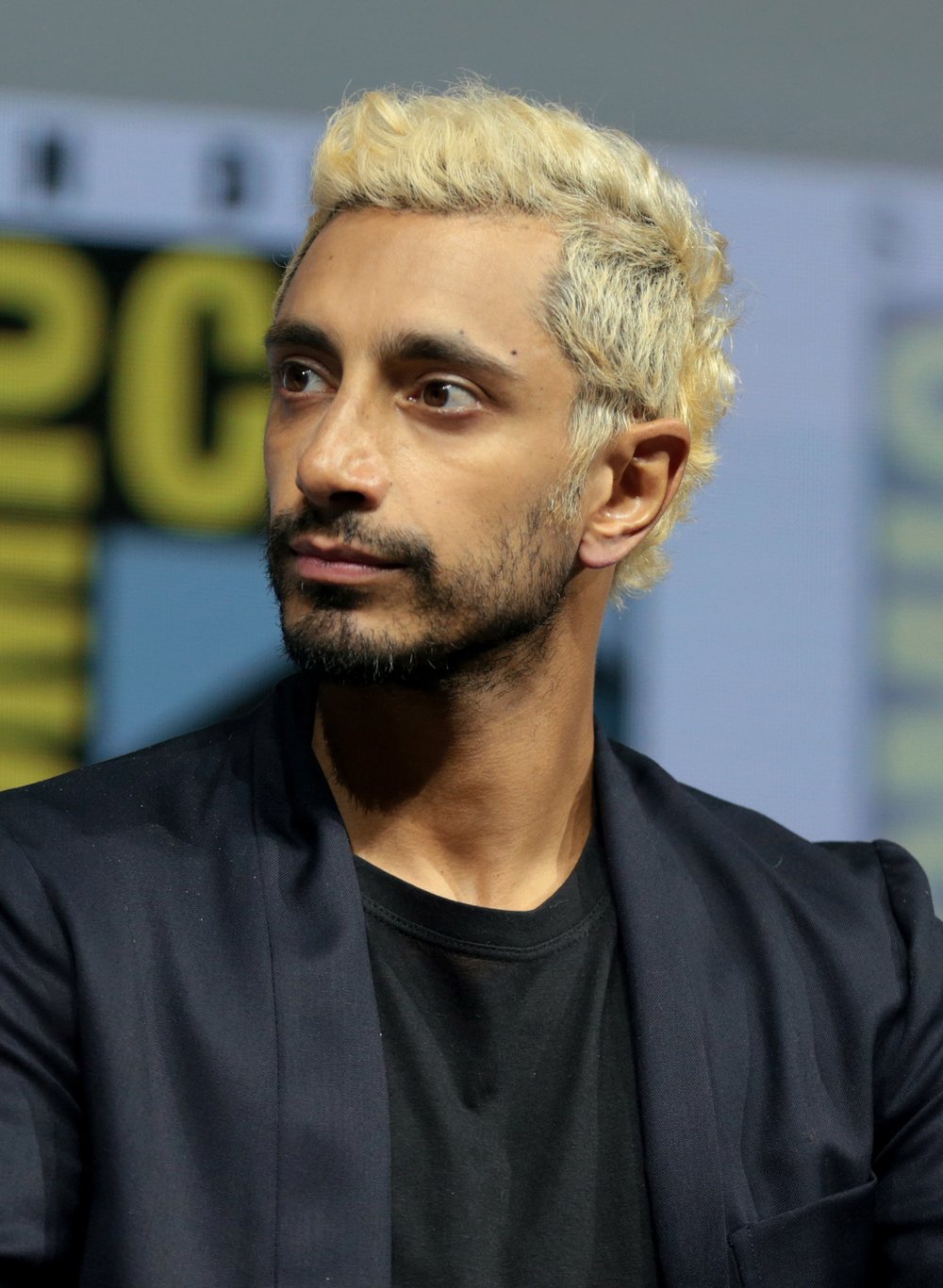
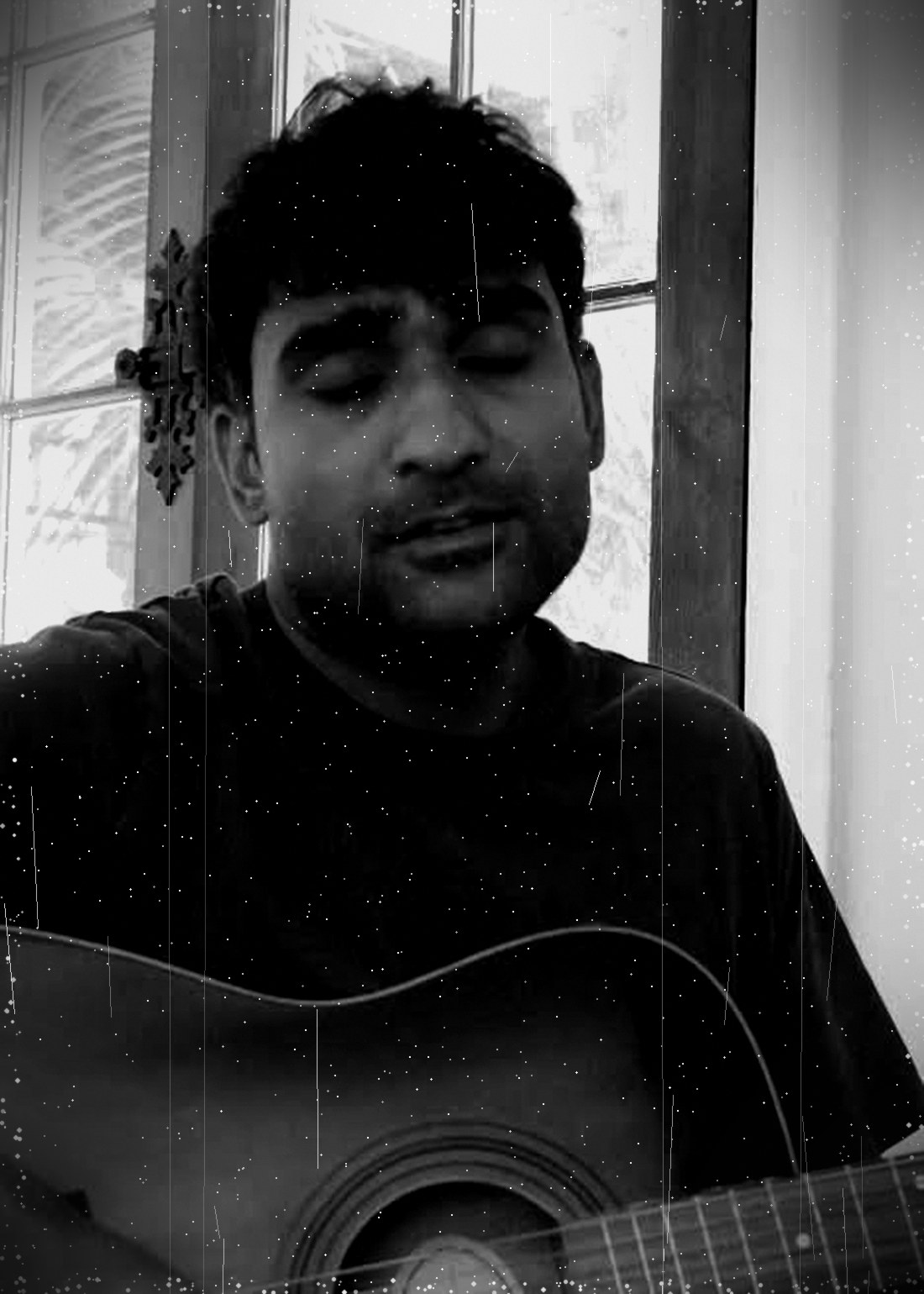
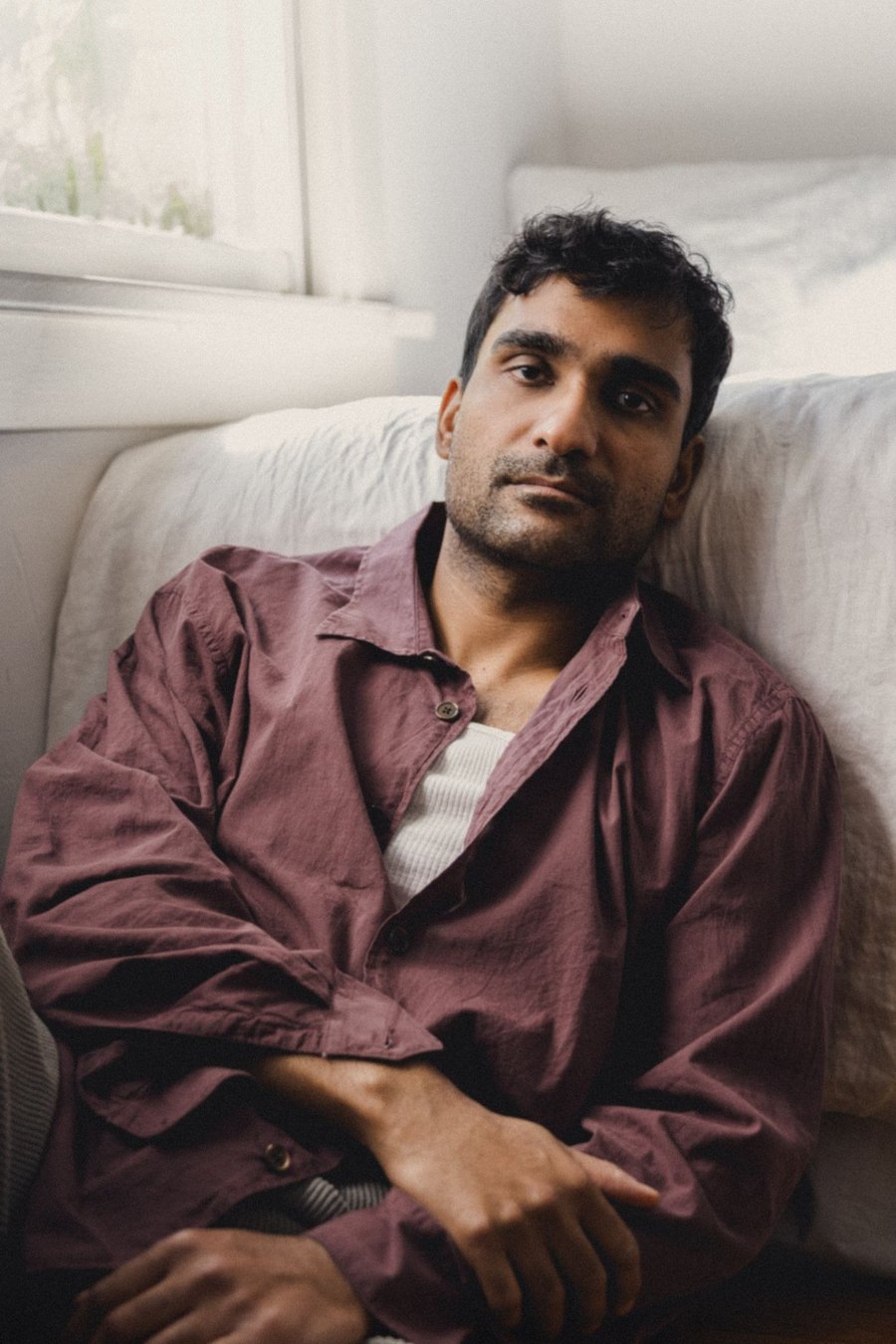
PRATEEK KUHADATTACHED
He is genuinely good. The only two people who listen are a six-year-old and the occasional drunk stranger.
Thirty-four, and still loading his own gear. Tarush has the talent — you hear it the second he plays — and none of the machinery that turns talent into a career. He is polite to the people who humiliate him, patient with a brother who endangers him, and gentle with the six-year-old who waits until the song is over before he eats. What he does not have is the ability to say no. The film is the story of what it costs him to learn.
WANT
To stop playing corporate gigs and finish one song of his own — the lullaby he promised Glichu.
FALSE BELIEF
If he absorbs enough humiliation quietly, the people who own him will eventually let him go.
TACTILE ANCHOR
His mother’s guitar, the last thing she gave him before she left. He refuses to sell it. Then the rent is due, the power is cut, and he sends Manu to deliver it to Leela.
REGISTER
Polite to everyone who humiliates him, and saves his shouting for his brother. When he finally swings at KT, he is beaten to the floor for it.
AROUND HIM
The four people who will not let him go.
Room to assemble a stellar ensemble supporting cast. Actors’ actors will love being part of a first-of-its-kind indie film out of the subcontinent.
MANU
THE BROTHER
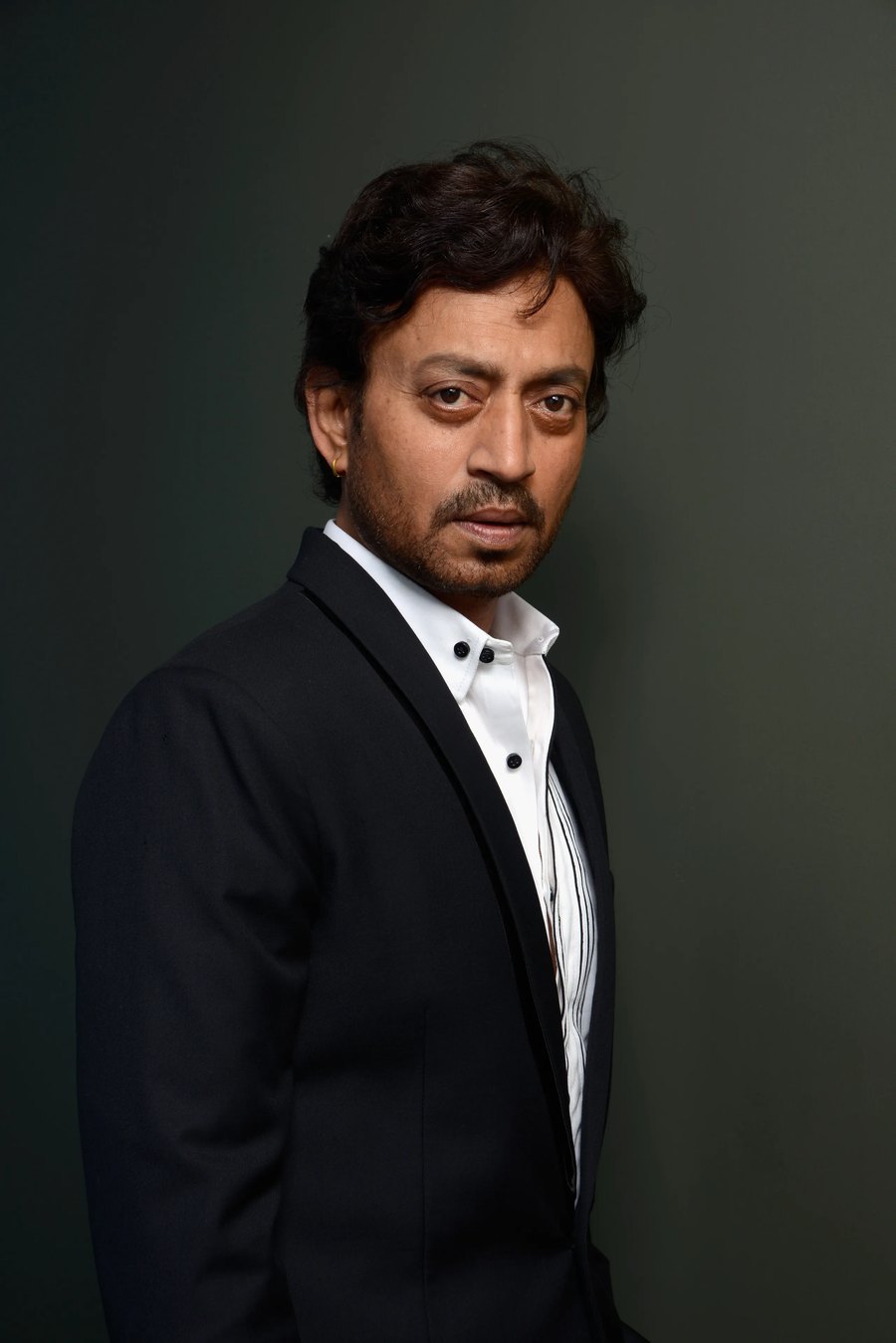
The kind of man who breaks a heckler’s nose with one headbutt to defend your honour, then blames you for the robbery from the getaway car.
WANTSTo be taken seriously as a musician by the one person whose opinion he cannot buy.
GLICHU
M, 6 / THE YOUNGEST
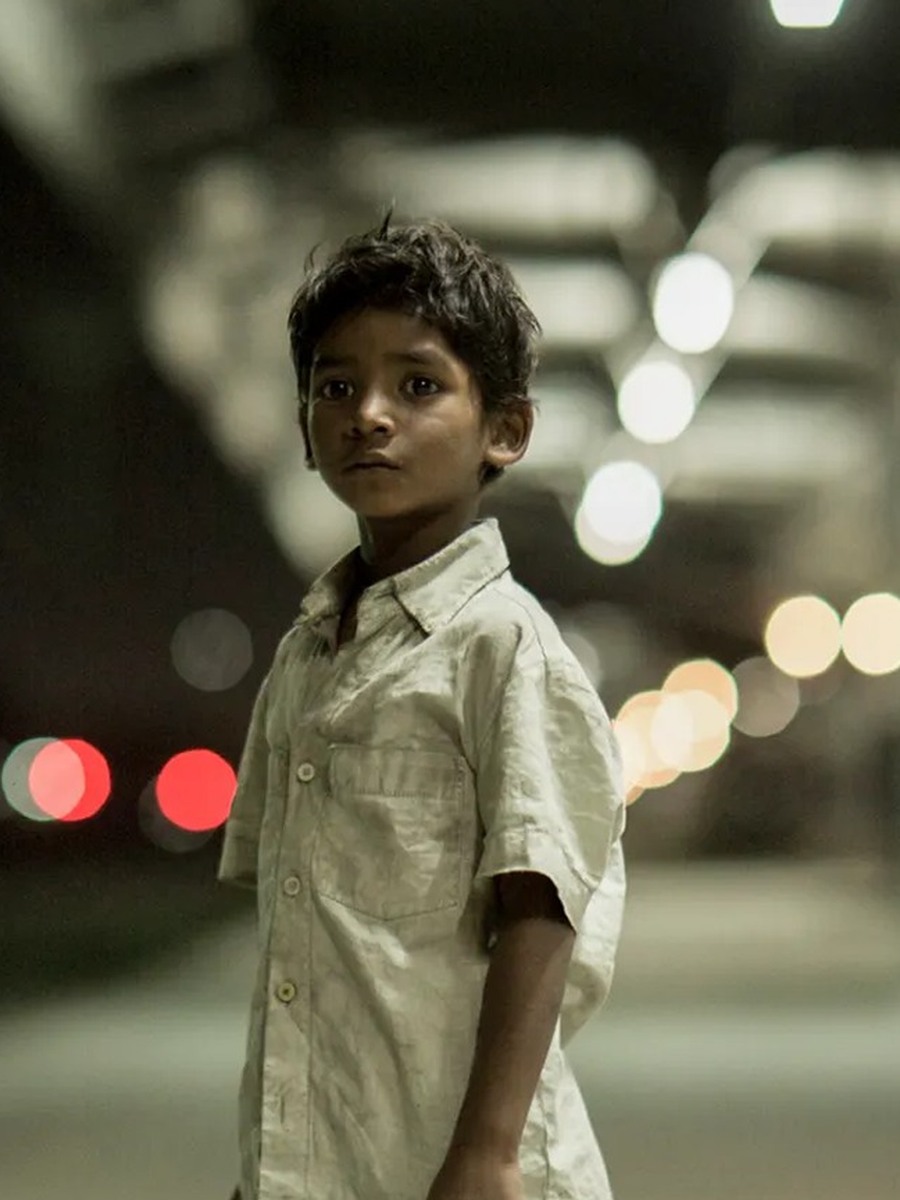
Tarush wants him to have a better life. Glichu just wants them to stick together.
WANTSFor Tarush to finish the lullaby, and to know whether he still has to do his homework.
LEELA
F, 50 / THE CLIENT
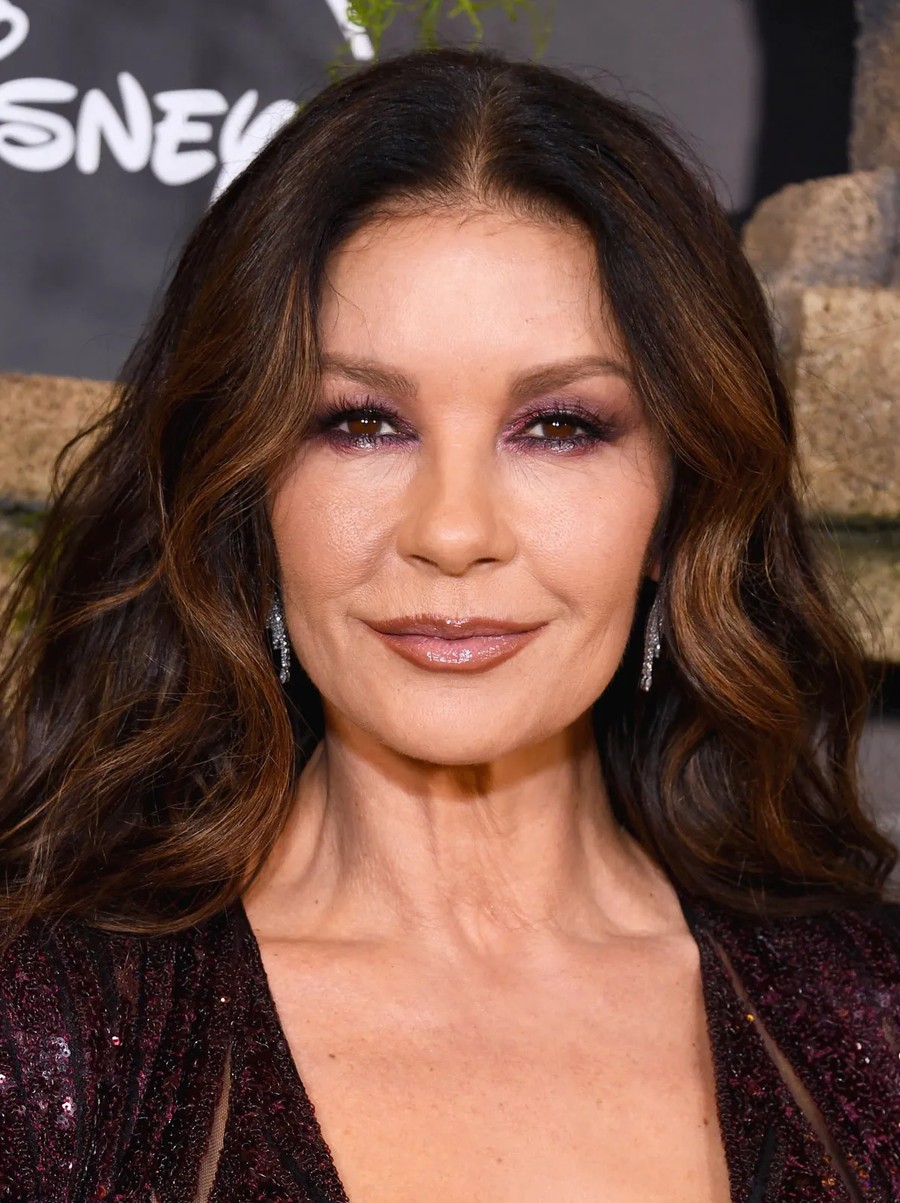
She hosts the kitty parties, has the jeweller bring diamonds to her living room, and has spent fifteen years unable to escape a husband who beats her.
WANTSCash, a passport, and the Nepal border — and she will threaten anybody to get there.
KT
M, 49 / THE LABEL
He kneels in front of a full party and ties Tarush’s shoelaces, then sends him out to do the work of a drug mule.
WANTSProduct. A new blue-eyed signee with two million followers, and a mule who is grateful for the work.
/04
THE SET-PIECES
Six set-pieces.
DROWNING is an innovative genre mash — a heist film, a musical, a comedy, a tragedy — all in a contained indie budget and wrapper. The set pieces are all executable for high production value on a lean budget. The film will look and feel like a $10–15M American indie, delivered on a $1M budget.
01
THE PEACOCK
A safari-themed kitty party in Gurgaon. Tarush plays the Jungle Book in a full peacock costume, the beak bobbing with every chord, and is paid in a shoebox of yellow Jordans. He puts the client’s fruit in the empty box and carries his old shoes home in his hand.
02
THE EQUIPMENT BOXES
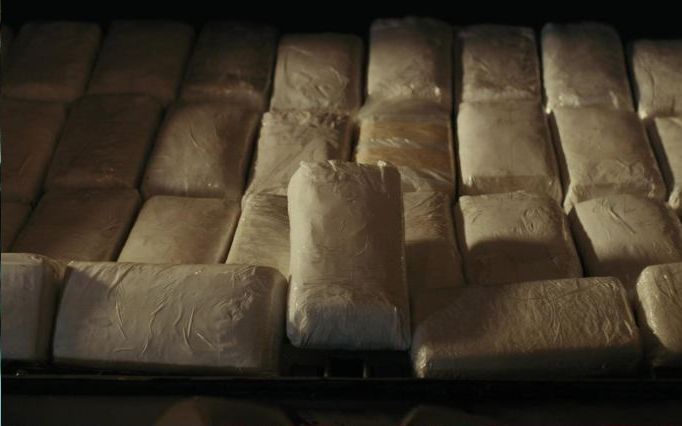
No chase, no reveal music. He pushes a false bottom, sees crate upon crate of cocaine under the gear he has loaded for years, and has to walk back on stage and sing. He can’t. He goes back, does a line of it, and finishes the set.
03
THE BREAK-IN
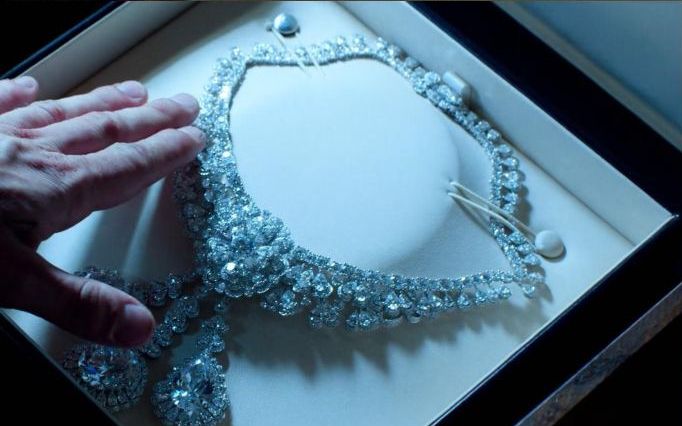
Two brothers hanging diamond necklaces on each other in a dark bedroom because they have run out of pockets. Then a door creaks, an iron rod swings, and a woman is on the floor. One heel knocks the marble all the way to the car. Tick. Tick. Tick.
04
TRAVEL JEWELRY
The comic gut-punch at the centre of the film: the haul is almost entirely costume jewellery kept for customs. Everything they have destroyed, they destroyed for nothing — and the woman they nearly killed is the one who has to explain it to them.
05
THE MAHJONG PARTY
A one-crore robbery executed in rented panda and monkey costumes at a South Delhi kitty party, with a six-year-old in a baby-panda suit carrying off the prize money, and a room of women who are not remotely as harmless as they look. One of them has a gun.
06
THE HIGHWAY
A chase scored by a bad amateur EDM track, a railway crossing taken ahead of a train, a boy left at a police station with a bag of money, a car on its roof, and a man on his back in a ditch filling with rainwater who finally remembers the song.
/05
MUSIC
One melody… constantly interrupted.
Music is the structure that binds the film together. Tarush is genuinely talented and you feel it the moment he plays — the joke his life keeps making is that the only people who actually listen are a six-year-old boy and the occasional drunk stranger.
“I’m writing a song. Actually today when I was on a bus I came up with the song but now I can’t remember it—”
/06
THE MUSICAL DESIGN
The music elevates reality. It does not break it.
DROWNING arrives at the moment the Indian indie film and indie music worlds are breaking, both at home and on the global stage. The lullaby Tarush writes for Glichu is poised to be our “Falling Slowly” — the Academy Award winner for Best Original Song from “Once.” In a market where music is inextricable from theatrical film, DROWNING can reach global success by lifting off organic support in the world’s largest youth market.
01
THE LULLABY
One melody holds the film together — the song Tarush promises to write for Glichu. He hears it on a bus and loses it to a phone call before he can record it. He almost gets it back several times. He finally remembers it lying in a ditch, and sends it to Glichu as a voice note.
02
THE NUMBERS ARE NOT ESCAPE
The musical sequences happen inside Tarush’s head and last seconds: beggars rising out of cardboard shelters into a street dance; a bored corporate crowd turning around to sing his own song back to him. He snaps out of each one. They are what he reaches for his whole life and never gets to keep.
03
THE SOUND OF BEING IGNORED
The mix is the drama. In the banquet hall the room’s noise drops away until the song is surreally clear — then a Bollywood track blasts from a speaker shaped like a dog and everyone finally cheers, because he has stopped.
04
MANU’S TRACK
The joke that becomes the ending. Manu’s bad electronic beat is an embarrassment for most of the film. In the chase, Tarush tells him to play it. The final cue is the lullaby over Manu’s track.
/07
THE TONAL CONTRACT
Real, funny, tragic, chaotic, and impossible to press reset on.
01
THE CAMERA
Handheld and close on Tarush for the grind; it stays at his level even when he is on the ground. In the final beating the camera never rises above the tarmac — all he can see is a pair of shoes.
02
THE CITY
Delhi and Gurgaon-Sohna: half-built roads, empty plots, 200 AQI inside the house, gated villas with jewellery on the floor and a bouncer for the jeweller. Wealth is loud, close, and completely unreachable.
03
THE COMEDY
Constant and never soft. A five-star rating exchanged for a one-star. Fruit in a shoebox. A robbery in a panda costume. The joke is always the cost of something, and it always lands just before the injury.
04
THE VIOLENCE
Sudden, clumsy and badly executed by people with no practice at it. Manu swings an iron rod because he is frightened, not because he is dangerous.
05
THE LANGUAGE
English, in the register Delhi actually speaks it — with a handful of Hindi and Urdu lines from cab drivers, house help and party guests, subtitled without apology. The profanity maps status: cab drivers and brothers swear constantly — and the brothers still tell each other off for swearing in front of Glichu.
06
THE CHILD
Glichu is never used for sentiment. He is the most practical person in the film — he has the passports packed before anyone asks, checks whether he still has to finish his homework, and asks the question the adults are avoiding: if a family goes to jail together, do they stay together?
/08
MOOD BOARD
Handheld, close, and always at his level.
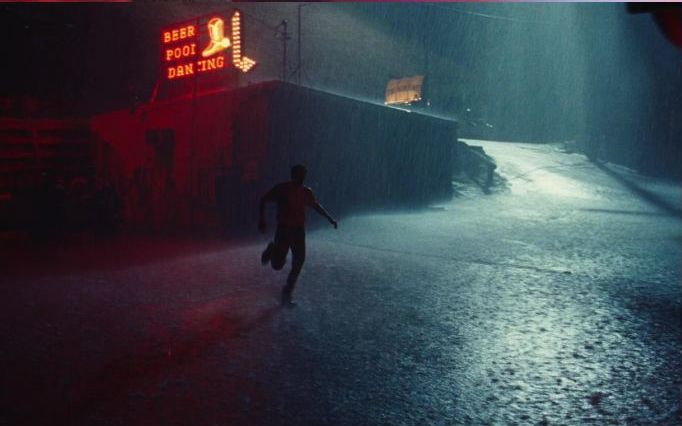
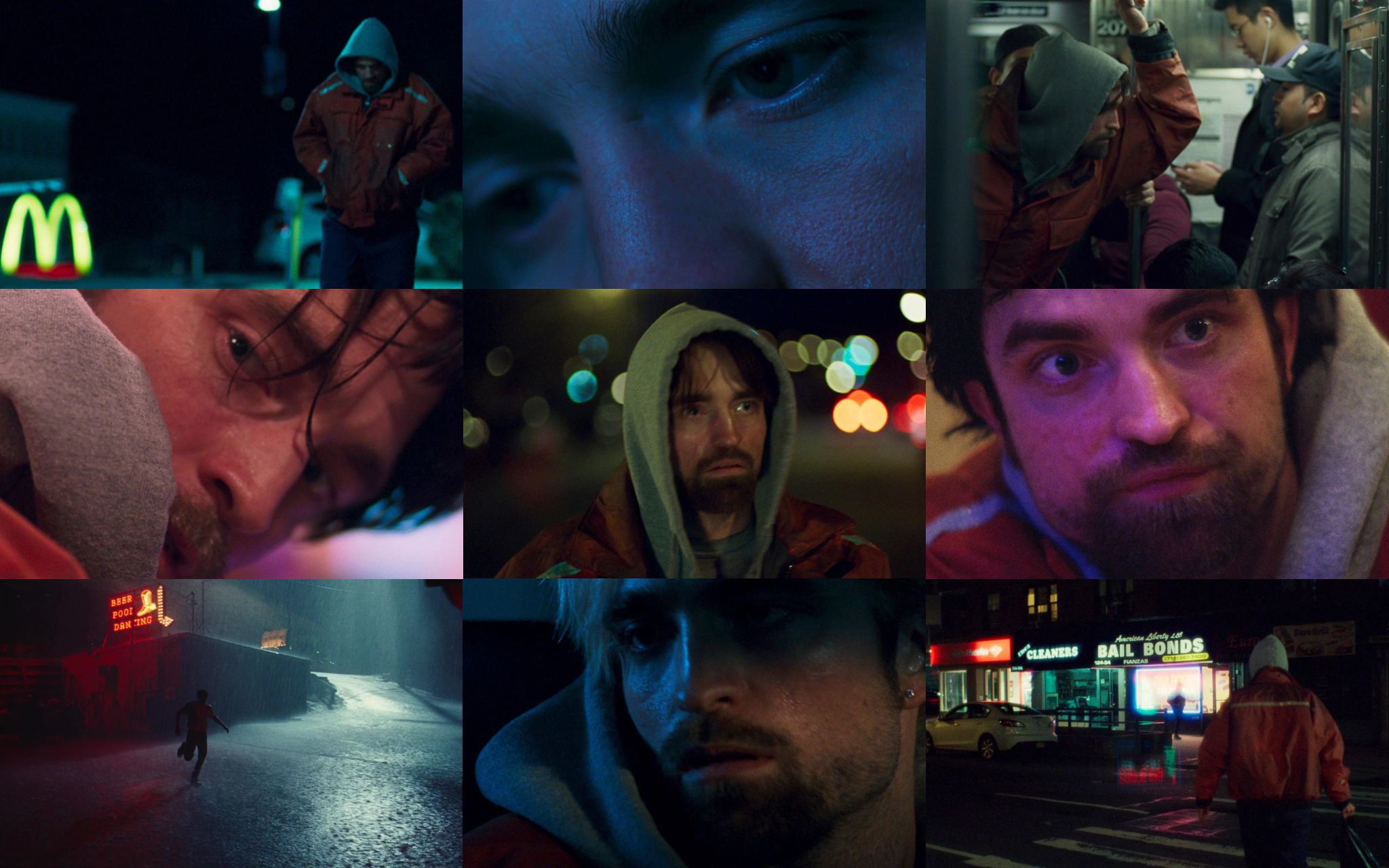
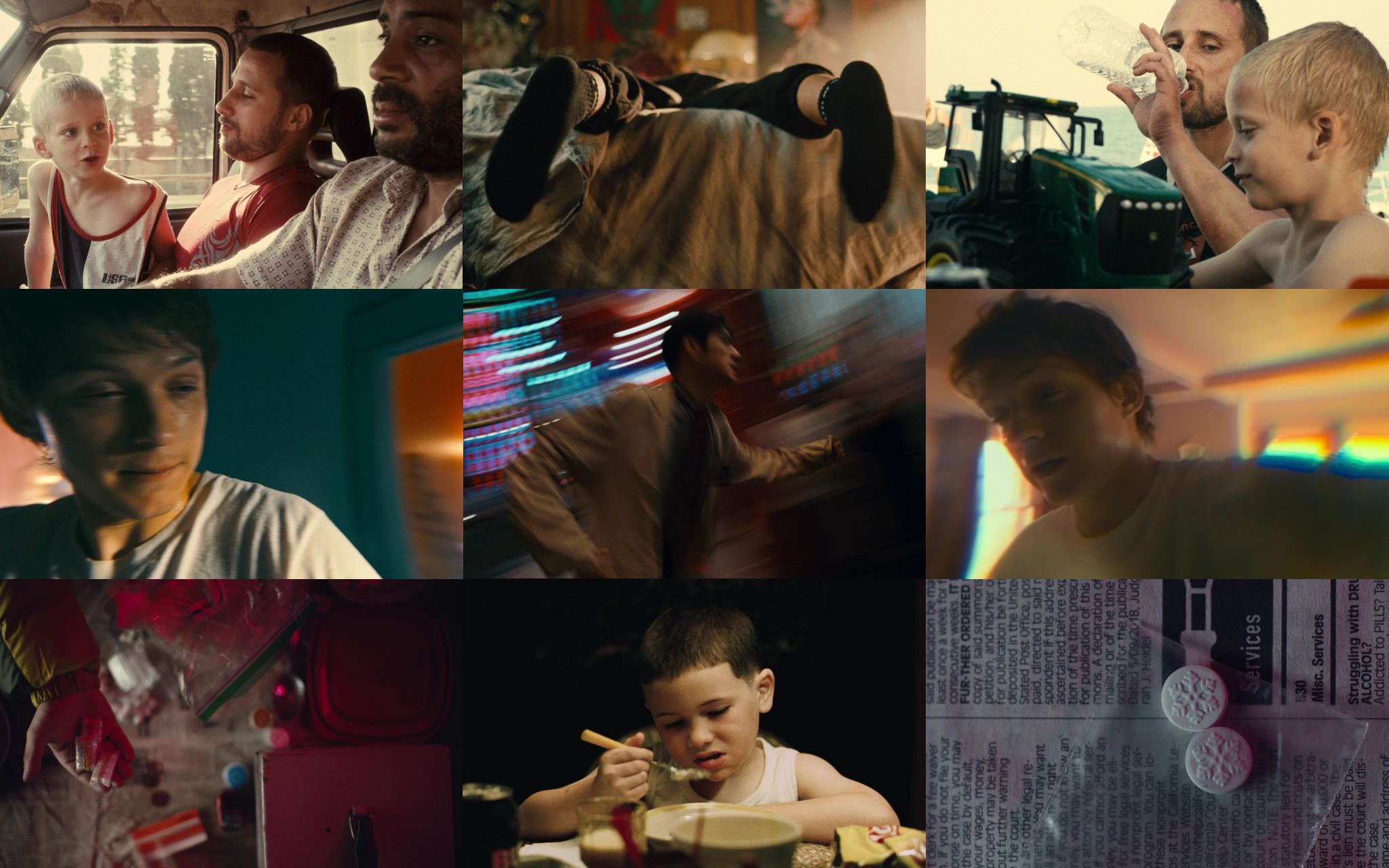
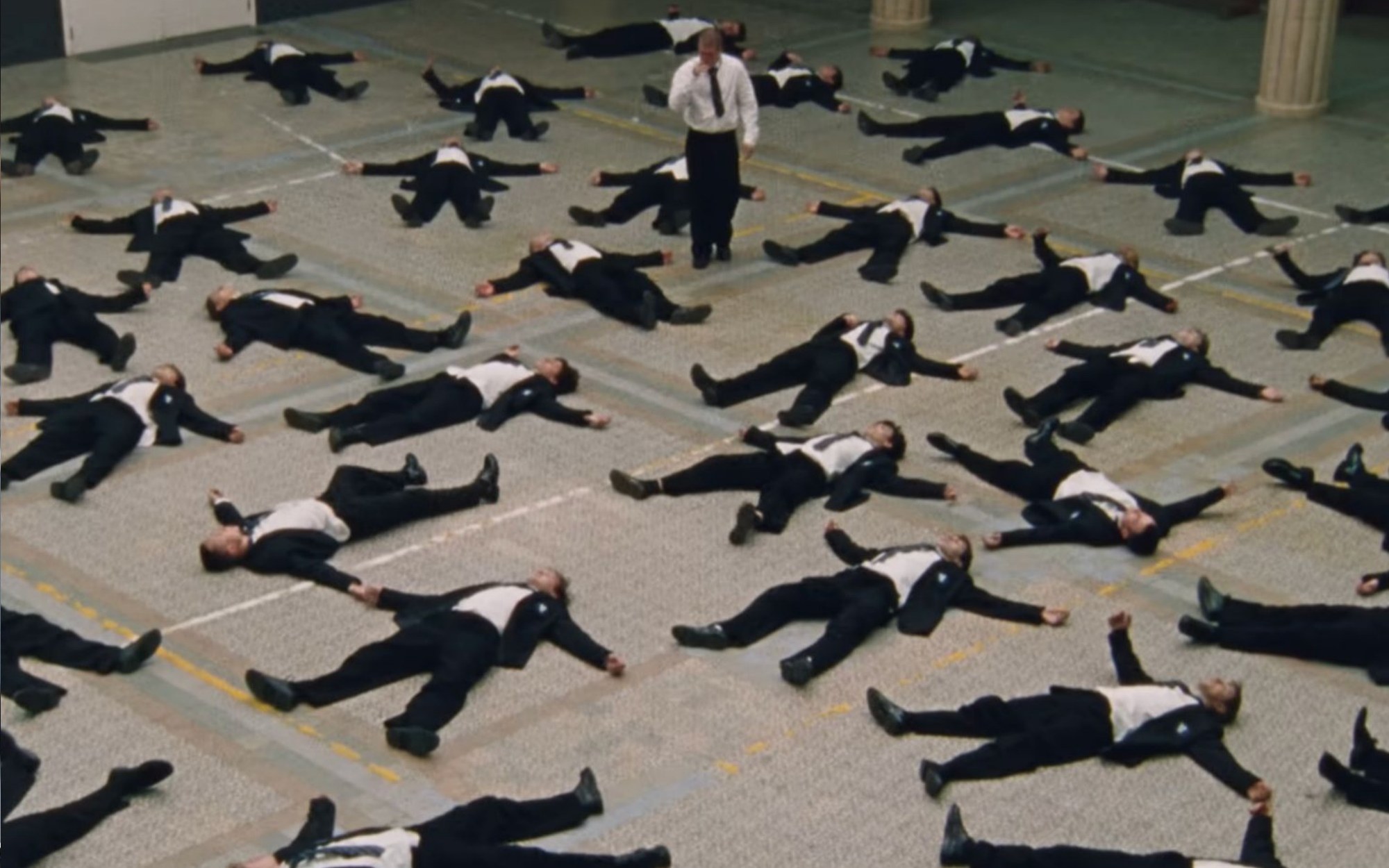
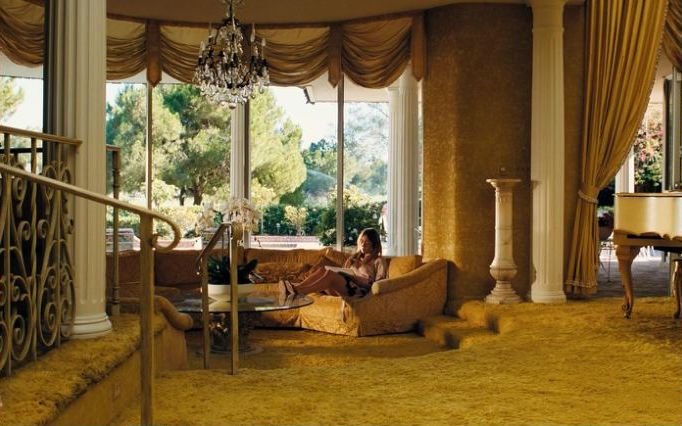
Directional reference only — not stills from this film. Grain, sodium light, wet tarmac, gold interiors, and the physical texture of things that cost money.
THE NIGHT / PROPULSION, SODIUM LIGHT, A MAN WHO CANNOT STOP MOVINGTHE FAMILY / THE REGISTER THAT KEEPS THE CRIME FILM HONEST/09
COMPS
ONCE meets GOOD TIME with the global potential of SLUMDOG.
01
GOOD TIME
The engine: one bad decision compounding across a single stretch of hours, a brother you cannot save and cannot leave, and a city that keeps producing new ways to lose.
02
DANCER IN THE DARK
For musical numbers that live inside the head of someone the world is quietly destroying — and for refusing to let the songs rescue anybody.
03
ONCE
For music made in real time by people with no money and no platform, and for treating a song being written as an event worth building a scene around.
04
THE FLORIDA PROJECT
For the child’s-eye register that keeps a hard film honest, and for comedy and catastrophe occupying the same frame without either one winning.
05
SLUMDOG MILLIONAIRE
The deck’s own shorthand — the scale, propulsion and subcontinental texture a global audience already has a door into.
/10
ATTACHMENTS
The package.
Marginal MediaWorks’ first fiction feature to shoot on location in South Asia, produced in partnership with D36 (Los Angeles) and Jugaad Motion Pictures (Mumbai).
01
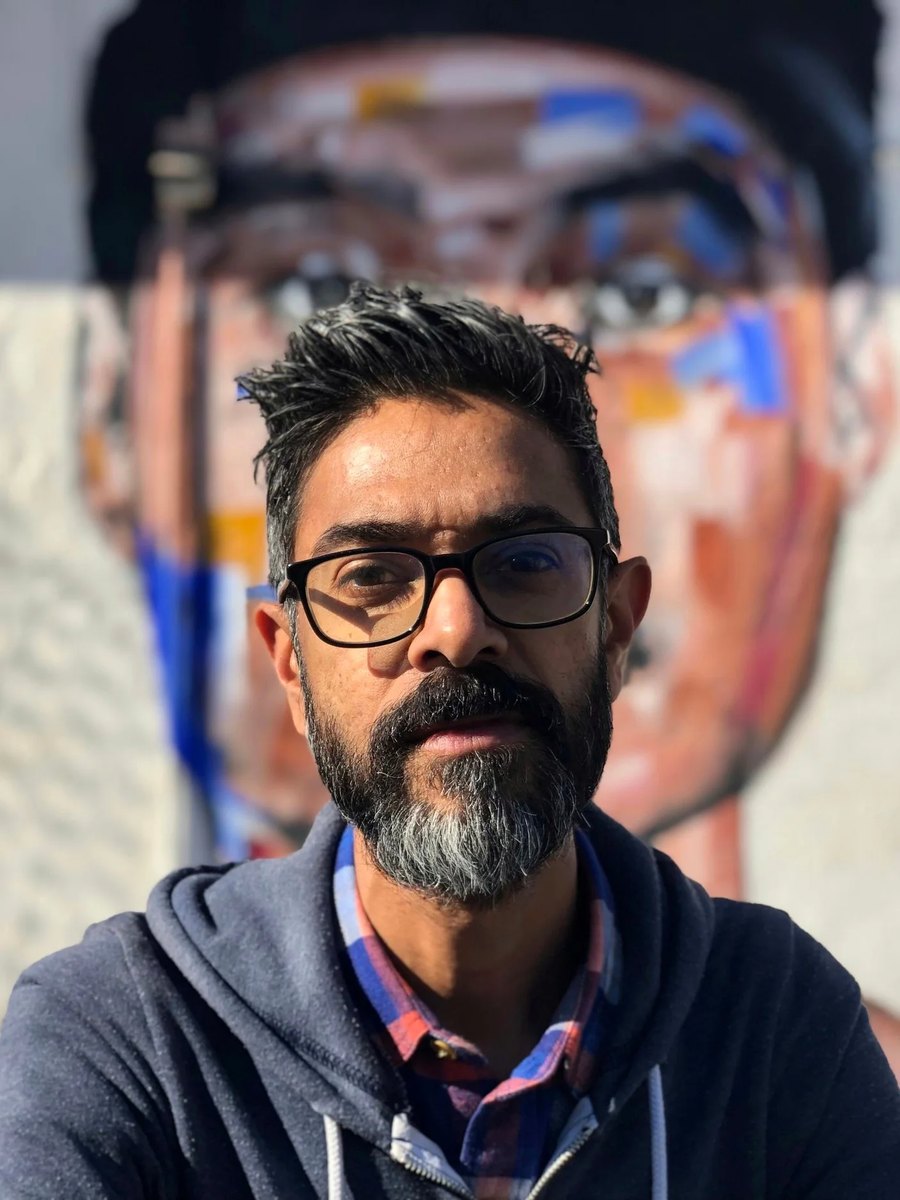
DAR GAI
WRITER & DIRECTOR
Berlinale Talents alumna. Debut feature “Three and a Half” (co-produced by Anurag Kashyap) streams on Netflix worldwide — 18 awards across 40+ festivals. “Namdev Bhau: In Search of Silence” premiered at Busan, BFI London and Palm Springs. Directed the “cold/mess” video for Prateek Kuhad — 300M+ views, Rolling Stone’s Music Video of the Year — plus award-winning brand campaigns for Levi’s, Netflix, Bumble and Tinder, including a Cannes Lions winner. TED speaker. Named one of the Top 15 Female Filmmakers of the Decade by Taste of Cinema.
02
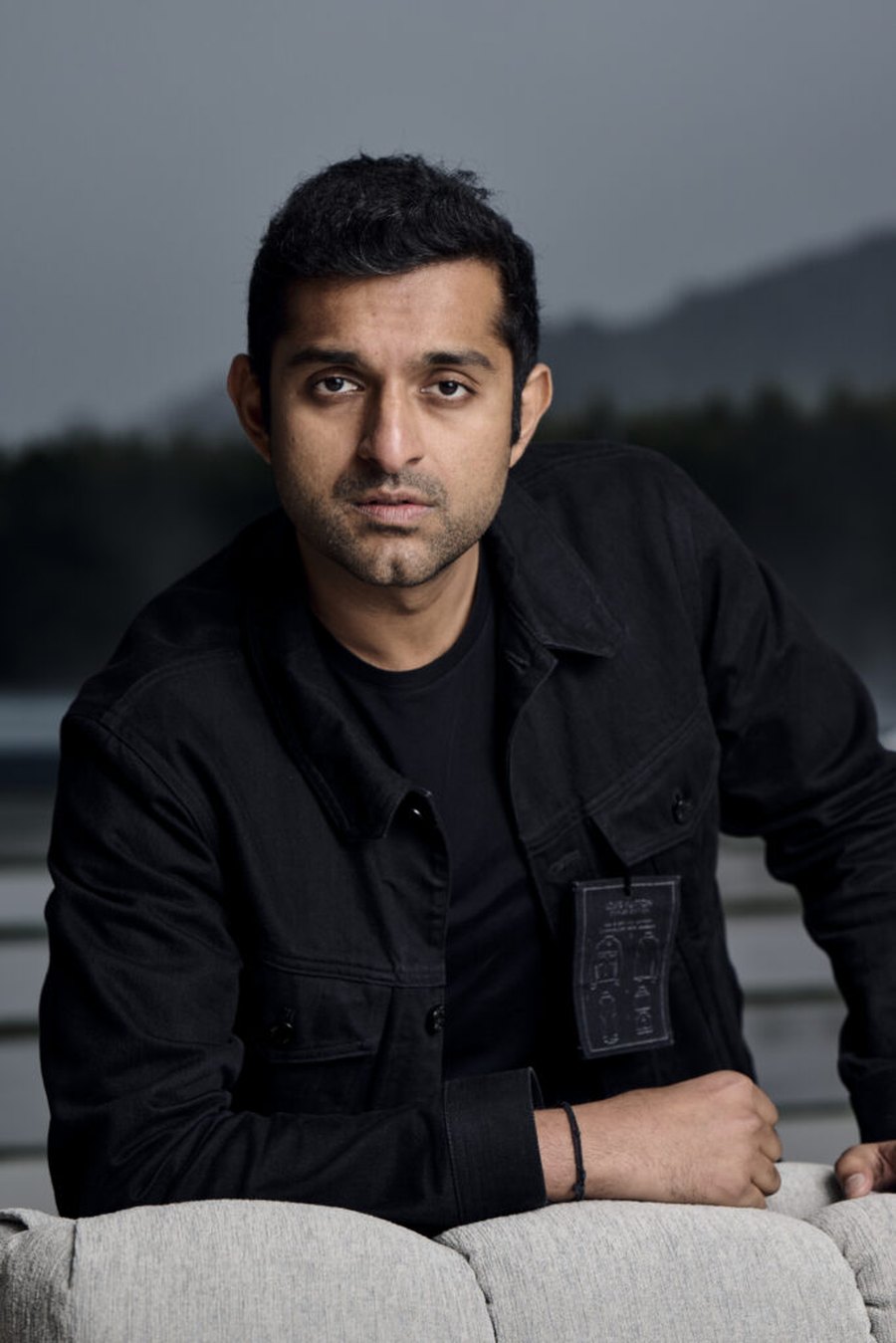
PRATEEK KUHAD
TARUSH
Feature acting debut. “One of the country’s leading singer-songwriters” (Rolling Stone India). “cold/mess” was picked by President Obama for his 2019 year-end playlist; “Kasoor” was the first independently released Indian track to top Apple Music’s all-genre chart. Sold-out headline tours across North America, Europe, the UK, Asia and the Middle East; headlined Lollapalooza India. Third album “Full Moon Chamber” released 10 July via Atlantic Records.
03
SANJAY M. SHARMA
MARGINAL MEDIAWORKS / FOUNDER & CEO
Developed and produced with Marginal’s Head of Film, Milan Chakraborty. DOOBNA is Marginal’s first fiction feature to shoot on location in South Asia; the company’s international slate spans Korea, Japan, Vietnam, Thailand, Europe and Canada, with South Asia now a dedicated vertical.
04
DHEER MOMAYA
JUGAAD MOTION PICTURES / CO-FOUNDER
Producer and co-founder of Jugaad Motion Pictures, Mumbai, alongside writer-director Dar Gai. Jugaad’s films include Pan Nalin’s “Last Film Show,” the first Indian film in 21 years shortlisted for the Foreign Language Oscar.
05
ABHI KANAKADANDILA
D36 / CO-FOUNDER & CEO
Leads D36, the South Asia–focused indie label behind left-field global collaborations including ZAYN on AUR’s “tu hai kahan,” Wiz Khalifa with colle$ttye on “BLUNTONOMICS,” and “Stadium Coupe” with Smino, Calm (Seedhe Maut) and Umair.
06
PRODUCTION
NEW DELHI
Shooting on location in New Delhi. Original story by Sharma, Chakraborty, Kanakadandila, Momaya and Gai; screenplay by Dar Gai.
 PRATEEK KUHADATTACHED